FSC and GRS in Bulky Office Supplies: What Buyers Must Check
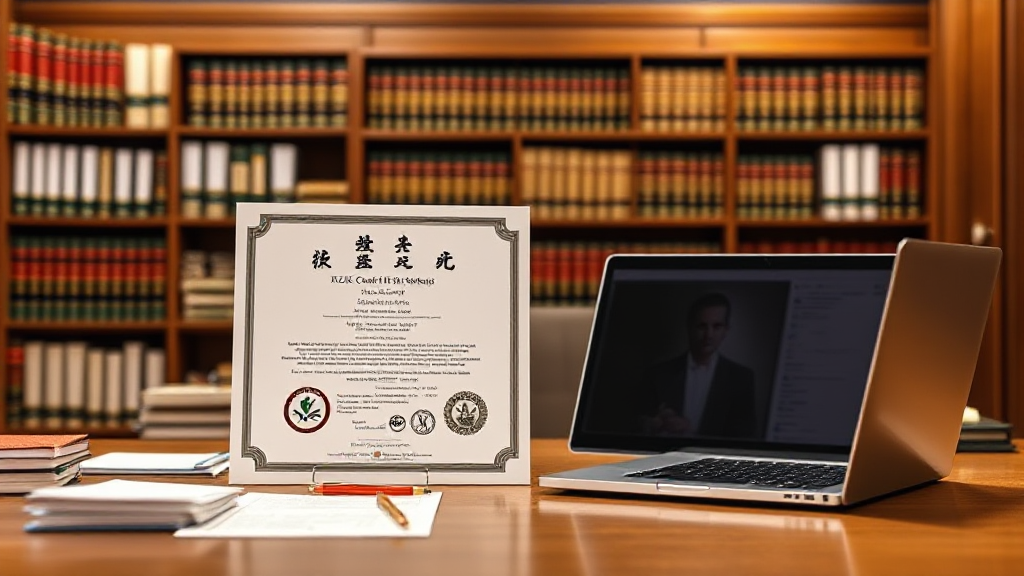
Picture a European retail buyer sitting at a desk with two supplier certificates side by side. Both carry the word “certified” in bold type. Both feature a stylised tree or a circular arrow. Both look reassuringly official. And yet one covers paper sourced from responsibly managed forests, while the other has nothing whatsoever to do with wood fibre, pulp or timber. One is FSC, the other is GRS. If you are sourcing white label office products in volume, confusing the two is not a paperwork nuisance. It is a compliance exposure that can surface in a customer audit, a tender questionnaire or a retail listing review months after the goods have shipped.
This is a practical explainer for buyers under pressure from sustainability teams, procurement directors and increasingly well-informed consumers. It walks through what FSC and GRS each actually cover, how to verify them without relying on the supplier’s word, where misclaims commonly hide, and what a complete documentation pack should contain before you release a purchase order.
Why Two Certificates That Look Alike Cover Completely Different Things
The confusion starts because both certifications are voluntary, third-party audited and visually similar in marketing materials. The similarity ends there. FSC is a forest-focused scheme. GRS is a recycled-content scheme for textiles and related materials. They answer different questions, apply to different product categories, and are governed by different assurance bodies. A supplier can legitimately hold one and not the other, and a product can carry one claim while the other is irrelevant to it.
In a typical office supplies catalogue, the split matters because the range is mixed. Notebooks, copy paper, notepads, box files, lever arch files, shipping cartons and desk pads are fibre-based and therefore fall into FSC territory. Pen barrels made from recycled plastic, textile-based desk accessories, lanyards, mouse mats and some packaging components may fall into GRS territory if recycled content is claimed. A single supplier may hold both, but each certificate applies to specific products and specific production sites, not to the company as a blanket halo.
That distinction is where most sourcing errors begin. Buyers see a logo on a catalogue cover and assume it travels with every SKU in the range. It does not.
FSC Explained: What It Covers in Paper-Based Office Ranges
The Forest Stewardship Council operates a chain-of-custody system. In simple terms, it tracks certified material from the forest through processing, manufacturing and distribution to the point where the finished product carries a claim. For office supplies, the relevant categories are paper, board, packaging and any product where wood fibre is a meaningful input.
There are three claim types buyers should recognise. FSC 100% means all the fibre in the product comes from FSC-certified forests. FSC Mix allows a blend of certified, recycled and controlled wood, provided the controlled portion meets the scheme’s minimum requirements. FSC Recycled means the fibre content is reclaimed material. These are not interchangeable claims, and a supplier should be able to tell you which one applies to the specific item you are buying.
The chain-of-custody certificate itself carries a code, typically beginning with letters that identify the certification body followed by a sequence. That code should appear on the supplier’s certificate, and the products carrying the claim should be traceable back to it. The certificate also lists the sites covered. If your supplier operates multiple factories, confirm which site produced your order and whether that site appears on the certificate.
For buyers assembling bulky office supplies programmes, this is not academic. Large paper volumes, high carton counts and multi-container shipments mean the fibre footprint is significant, and sustainability teams will ask for evidence at the programme level, not just the sample level.
GRS Explained: Recycled Content Claims in Non-Paper Products
The Global Recycled Standard is a certification for products containing recycled materials, with a strong historical focus on textiles but extending to other product categories where recycled content is claimed. It verifies the recycled input percentage, tracks it through the supply chain, and adds requirements around social responsibility, environmental management and chemical restrictions.
GRS matters for office supplies in specific pockets of the range. Recycled polyester in bags and lanyards, recycled plastics in pen bodies or desk organisers, recycled textile content in mouse mats and similar accessories. If a supplier claims recycled content on a product, GRS is one of the recognised ways to substantiate it, provided the claim is backed by a valid certificate covering that product and that production site.
The critical detail is the percentage. GRS claims are tied to a declared recycled content figure, and that figure should be documented in the transaction certificates that accompany the goods. A supplier saying “made with recycled materials” is not the same as a supplier holding a GRS certificate and issuing transaction certificates that state the recycled percentage for the specific order.
Buyers should also be aware that recycled content claims in the EU are subject to consumer protection rules that have tightened considerably. Unsubstantiated environmental claims are a regulatory risk, not just a reputational one. This is one reason a growing number of European importers now prefer to consolidate with a sourcing partner that can present certified sustainable Office Supplies documentation as standard rather than as a special request.
How to Verify a Certificate Without Taking the Supplier’s Word
Verification is a process, not a single check. The following steps are the ones that consistently catch problems.
Step one: check the certificate number against the issuing body’s public database. Both FSC and GRS certificates can be looked up through the relevant accreditation and certification body systems. If the number does not return a live, valid record, stop there.
Step two: confirm the certificate holder’s legal name matches your supplier or their nominated manufacturer. A common issue is a trading name that differs from the legal entity on the certificate. Ask for the relationship to be explained in writing.
Step three: check the scope. The certificate lists product categories and processes. A certificate covering paper conversion does not automatically cover plastic pen manufacturing, and vice versa. Match the scope to what you are actually buying.
Step four: check the sites. Confirm the production site for your order appears on the certificate. Multi-site operations sometimes have certificates that cover some facilities and not others.
Step five: check validity dates. Certificates expire and are suspended. A certificate that was valid when the relationship began may not be valid today.
Step six: request transaction or chain-of-custody documents for your specific order. This is the step most buyers skip, and it is the one that closes the loop between a company-level certificate and the goods in your container.
Common Misclaims and Where They Hide
Misclaims are rarely dramatic forgeries. More often they are small stretches of language that create the wrong impression. Watch for these patterns.
Company-level claims applied to product level. A supplier holds a valid certificate for one product line and uses the logo across the entire catalogue. The certificate is real; the application is wrong.
Expired or suspended certificates presented as current. The document looks genuine because it once was. Always check the live database rather than the PDF.
Scope creep. A certificate covering a narrow process is presented as covering finished goods. Paper sourcing certification is not the same as finished product certification in every case.
Vague recycled claims. “Eco-friendly”, “green” or “made with recycled content” without a certificate, a percentage or a transaction document. These phrases carry no verifiable meaning and are increasingly risky in European markets.
Logo misuse. Certification logos have usage rules. A supplier printing an FSC or GRS mark on packaging without the underlying claim and approval is creating a problem that lands on the buyer’s brand, not just the factory’s.
For importers building private label office products, the exposure is amplified because your brand sits on the packaging. A claim you cannot substantiate is a claim your business owns in front of regulators and customers.
A Documentation Checklist for Every Order
Before releasing a purchase order for certified product, assemble the following. Keep it per order, not per supplier relationship, because certificates and scopes change.
Valid certificate copy showing holder name, certificate number, scope, covered sites and expiry date.
Database verification screenshot or reference confirming the certificate is live at the time of ordering.
Site confirmation identifying the specific factory producing your order and its inclusion on the certificate.
Claim type declaration stating which claim applies, such as FSC Mix or a specific GRS recycled percentage.
Transaction or chain-of-custody documents linking certified material to your order quantity.
Packaging artwork approval confirming any certification marks used on your private label packaging are permitted and correctly applied.
Social compliance evidence where required, since GRS includes social criteria and European tenders increasingly bundle sustainability and labour standards into a single questionnaire.
This pack does two things. It protects you in an audit, and it shortens the next tender cycle because the evidence is already organised.
Building Certification Into Supplier Selection
The most efficient way to manage certification risk is to make it a selection criterion rather than a post-order chase. Ask for certificate numbers during onboarding. Verify them before samples are approved. Write claim accuracy into supply agreements with clear remedies. Require notification if a certificate lapses during the contract term.
Working with a sourcing partner that already operates within certified supply chains reduces the administrative load considerably. A Hong Kong-based partner with established factory relationships across Asia can typically present FSC and GRS documentation as part of the standard quotation pack, align claims with your packaging artwork, and support the tender documentation that European retail buyers are increasingly required to submit. That shifts certification from a recurring fire drill into a routine part of the buying process.
The two certificates on that buyer’s desk were never identical. One governs fibre, one governs recycled content. Knowing which is which, verifying both properly, and documenting the link to your specific order is what separates a defensible sustainability claim from a liability waiting to be discovered.
Frequently Asked Questions
Can a supplier hold FSC and GRS at the same time?
Yes. The two certifications cover different material types and are managed under separate schemes, so holding both is entirely possible. What matters is that each certificate’s scope matches the specific products you are buying and the site that produces them. Holding both does not mean every product in the range is covered by both.
Does an FSC certificate on paper products cover the packaging too?
Not automatically. Packaging is a separate product category and must be within the certificate’s scope and produced at a covered site. If you are placing certification marks on private label packaging, confirm the packaging itself is eligible and that artwork usage has been approved.
How often should I re-verify certificates during a long supply relationship?
At minimum annually, and again whenever you place a significant order or change production site. Certificates expire, scopes change and suspensions occur. A verification performed at onboarding does not remain valid for the life of a multi-year contract.
What should I do if a supplier cannot provide transaction documents?
Treat it as a red flag. A valid certificate at company level should be supported by documents linking certified material to your order. If those cannot be produced, the claim is not substantiated for your goods, regardless of how convincing the certificate looks.
Are recycled content claims regulated in the EU?
Yes, and enforcement has become more active. Environmental claims must be substantiated and specific. Phrases like “eco-friendly” without evidence are risky. Certification such as GRS, supported by a declared recycled percentage and transaction documents, is one of the recognised ways to substantiate a recycled content claim.